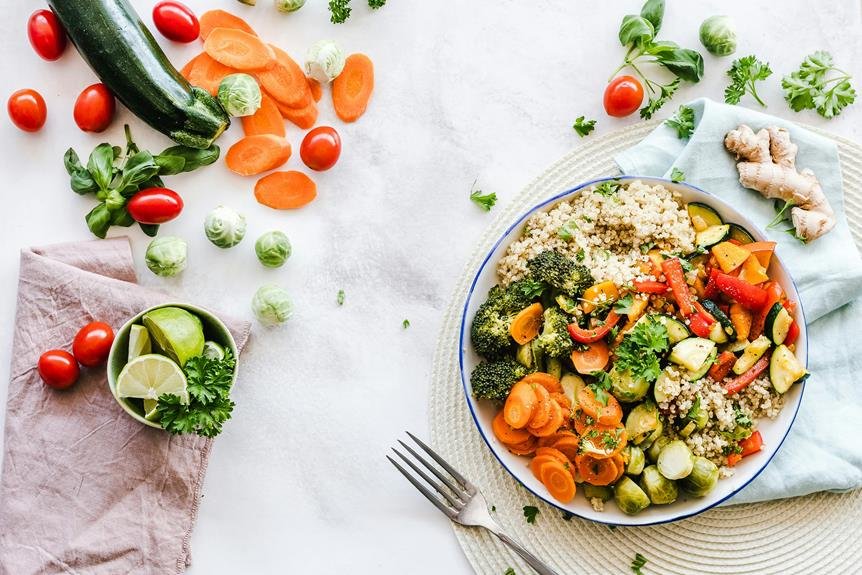
Building a balanced plate is essential for your optimal health. Make sure to include a variety of foods like fruits, vegetables, whole grains, lean proteins, and healthy fats to provide your body with essential nutrients. Remember, portion control plays a crucial role in maintaining a healthy diet, so be mindful of your servings. By focusing on colorful options and incorporating different food groups, you can enhance your meals and promote a well-rounded diet. Including lean proteins, whole grains, and colorful produce will help you build a nutritious plate that supports your overall well-being and vitality.
The Importance of Balanced Nutrition
Balanced nutrition is crucial for maintaining overall health and well-being. It serves as the foundation for your body to function at its best. By consuming a variety of foods that provide essential nutrients, you can support your immune system, energy levels, and overall vitality.
When you prioritize balanced nutrition, you're giving your body the tools it needs to thrive. This means including a mix of fruits, vegetables, whole grains, lean proteins, and healthy fats in your meals. These foods work together to provide your body with vitamins, minerals, antioxidants, and other essential nutrients that contribute to your overall health.
Understanding Food Group Essentials
Delving into the essentials of food groups provides a comprehensive understanding of how different nutrients contribute to your overall health. Each food group offers unique benefits that are essential for your body to function optimally.
Fruits and vegetables are rich in vitamins, minerals, and antioxidants, supporting your immune system and overall well-being. Grains provide carbohydrates, which are your body's primary source of energy. Including whole grains in your diet can also improve digestion and heart health.
Proteins, found in sources like meat, fish, beans, and nuts, are crucial for building and repairing tissues. Dairy products offer calcium for strong bones and teeth. Healthy fats from sources like avocados and olive oil support brain function and hormone regulation.
Portion Control and Serving Sizes
Exploring the importance of controlling portion sizes is key to maintaining a healthy diet and managing your caloric intake effectively. Portion control involves being mindful of how much food you put on your plate. It's easy to overeat when portions are too large, leading to excess calorie consumption. By controlling your serving sizes, you can better regulate your weight and overall health.
When serving yourself, use smaller plates to help manage portions visually. Aim to fill half your plate with vegetables, a quarter with lean proteins, and the remaining quarter with whole grains. This method ensures a balanced intake of nutrients without overdoing it on any particular food group.
Additionally, be mindful of portion sizes when eating out or grabbing snacks on the go. Opt for smaller sizes, share meals, or save half for later to avoid consuming more than you need. By being aware of portion sizes and making conscious choices, you can better control your caloric intake and support your overall health goals.
Incorporating Color and Variety
To enhance your meals and promote a well-rounded diet, focus on incorporating a variety of colorful fruits and vegetables. Including an array of colors in your meals ensures that you're getting a wide range of essential vitamins, minerals, and antioxidants. Aim to fill half your plate with vibrant produce like leafy greens, bell peppers, berries, carrots, and squash.
Each color represents different nutrients that are beneficial for your health. Red fruits and vegetables like tomatoes and watermelon contain lycopene, which supports heart health. Blue and purple produce such as blueberries and eggplants are rich in anthocyanins, known for their antioxidant properties. Yellow and orange options like oranges and sweet potatoes provide beta-carotene, important for eye health. Green varieties like spinach and broccoli offer folate and vitamin K for optimal body function.
Experiment with new fruits and vegetables regularly to keep your meals exciting and nutritious. By incorporating a rainbow of colors on your plate, you can ensure you're getting a wide range of nutrients to support your overall health and well-being.
Tips for Building a Nutritious Plate
For a balanced and nutritious meal, focus on including lean proteins, whole grains, and plenty of colorful fruits and vegetables on your plate.
Start by filling half of your plate with non-starchy vegetables like leafy greens, bell peppers, or tomatoes. These veggies are low in calories but high in essential nutrients like vitamins, minerals, and fiber.
Next, add a quarter of your plate with a lean protein source such as chicken, fish, tofu, or beans. Protein is crucial for muscle repair, energy, and keeping you feeling full.
Lastly, complete your meal by adding a quarter of whole grains like quinoa, brown rice, or whole-wheat pasta. Whole grains provide lasting energy and fiber to support digestion.
Remember to season your food with herbs, spices, or a squeeze of lemon instead of excess salt or sugary sauces. By following these simple tips, you can create a nutritious plate that supports your overall health and well-being.